

IFT and CCLATAM present the research project of Julia Bernarde, a deep dive into the opportunities of data centre development in three countries in South America
Abundant hydroelectric resources make Latin American (LATAM) countries such as Brazil, Uruguay, and Paraguay are attractive locations for “green” data centres that utilize clean energy and energy-efficient technologies to minimize their environmental impact. To sustainably manage this infrastructure buildout, Latin American countries need to adopt policies that align digital growth with environmental protection and thoughtfully manages the risks posed increasing stress on the electric grid.
Public policy undergraduate student Julia Bernarde offers recommendations to support green data centre development that strengthens regional resilience, supports LATAM’s economic growth, and protects natural resources. She describes how the opportunities presented by data centre investment and infrastructure expansion can be pursued within an ethical framework that safeguards environmental integrity and local community well-being.
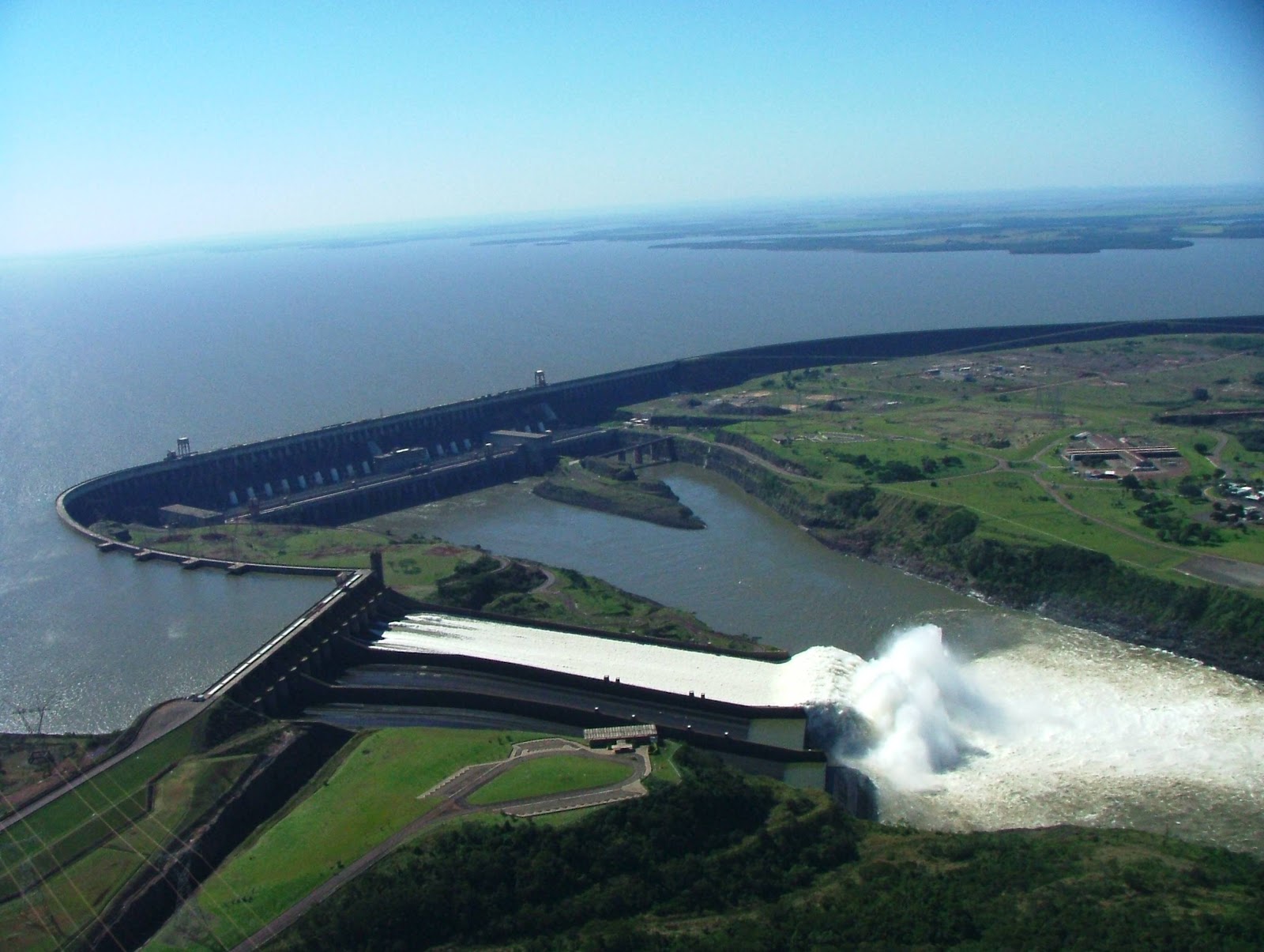
Stand on the lip of the Itaipu dam and you can watch a country’s comparative advantage thundering past at forty thousand cubic metres a second.
Paraguay generates so much clean electricity that it scarcely knows what to do with it; for half a century, under the terms of a 1973 treaty, it was obliged to sell its surplus to Brazil at below-market rates. That obligation has now lapsed. The question this timely paper asks is: what should the region do with its extraordinary endowment next?
The answer, in part, is to sell it to the world in a new form. Data is the cargo of the twenty-first century, and data centres are its ports and warehouses. They are also ravenous consumers of electricity. The great technology companies, bound by their own emissions pledges, are scouring the globe for clean, cheap, reliable power. Latin America has it in abundance: Brazil’s grid is nearly nine-tenths renewable, Uruguay’s about 98 per cent, Paraguay’s effectively all of it.
Julia Bernarde’s paper, written for CCLATAM during her summer internship, is realistic about the obstacles: grids strained by concentrated hydropower dependence, opaque load forecasting, permitting mazes and regulatory uncertainty. Her prescriptions – technology-neutral energy auctions on the Chilean model, investment zones with streamlined permitting and fiscal incentives, and the integration of digital demand into national energy planning – are in the best tradition of liberalisation. Uruguay’s free trade zones, which have already attracted an $850 million Google campus, show how green tech investment thrives when government steps away and allows innovators to innovate.
The paper also raises concerns about sovereignty and so-called green colonialism, and here readers will weigh the arguments for themselves. Our own view at IFT is that the surest safeguard against exploitation is not restriction but the rule of law: secure property rights, transparent contracts, open competition and governments strong enough to enforce the terms they strike. Contract and free markets have created every one of the cleanest, greenest richest, and freest societies on our planet. Foreign investment freely contracted has been a key part of the greatest engine of mutual enrichment the world has known. Indeed, South America, pre-Colombian, Colonial, and post-independence, had prospered only when the enterprising genius of its peoples has been allowed to spread and engage across the region, and post-independence, with the rest of the world.
Britain, for its part, should take note. As we deepen our trading relationships across the Americas, digital and energy infrastructure will be where much of the growth lies. We commend this paper to policymakers, investors and negotiators on both sides of the Atlantic.
SHARE


